
Why Gas Prices Rocket Up but Feather Down
Drivers in the Greater Toronto Area got a rude awakening at the pumps yesterday. Thanks to escalating geopolitical tensions in Iran, gas prices spiked by 8 cents per litre overnight, pushing the average price for regular fuel up to roughly $1.73 per litre, leaving many motorists feeling gouged at the pumps.
Since the conflict in the Middle East began, Brent crude oil has climbed by 10% in total, yet the average Canadian gas price has surged by 18%. And while crude oil prices have collapsed almost 26% since early May, retail gas prices have trickled down by about 11%.
Economists call this the “rockets and feathers” effect.
Gasoline stations set their prices based on their replacement cost, which is the cost required to buy their next shipment of fuel. Because of the thin profit margin that a gas station makes, these retailers are highly sensitive to their future costs, competitor prices, and consumer reactions. Failure to do so could mean insufficient cash reserves to afford the next delivery. So, it makes sense to raise gas prices when the cost of oil is skyrocketing up.
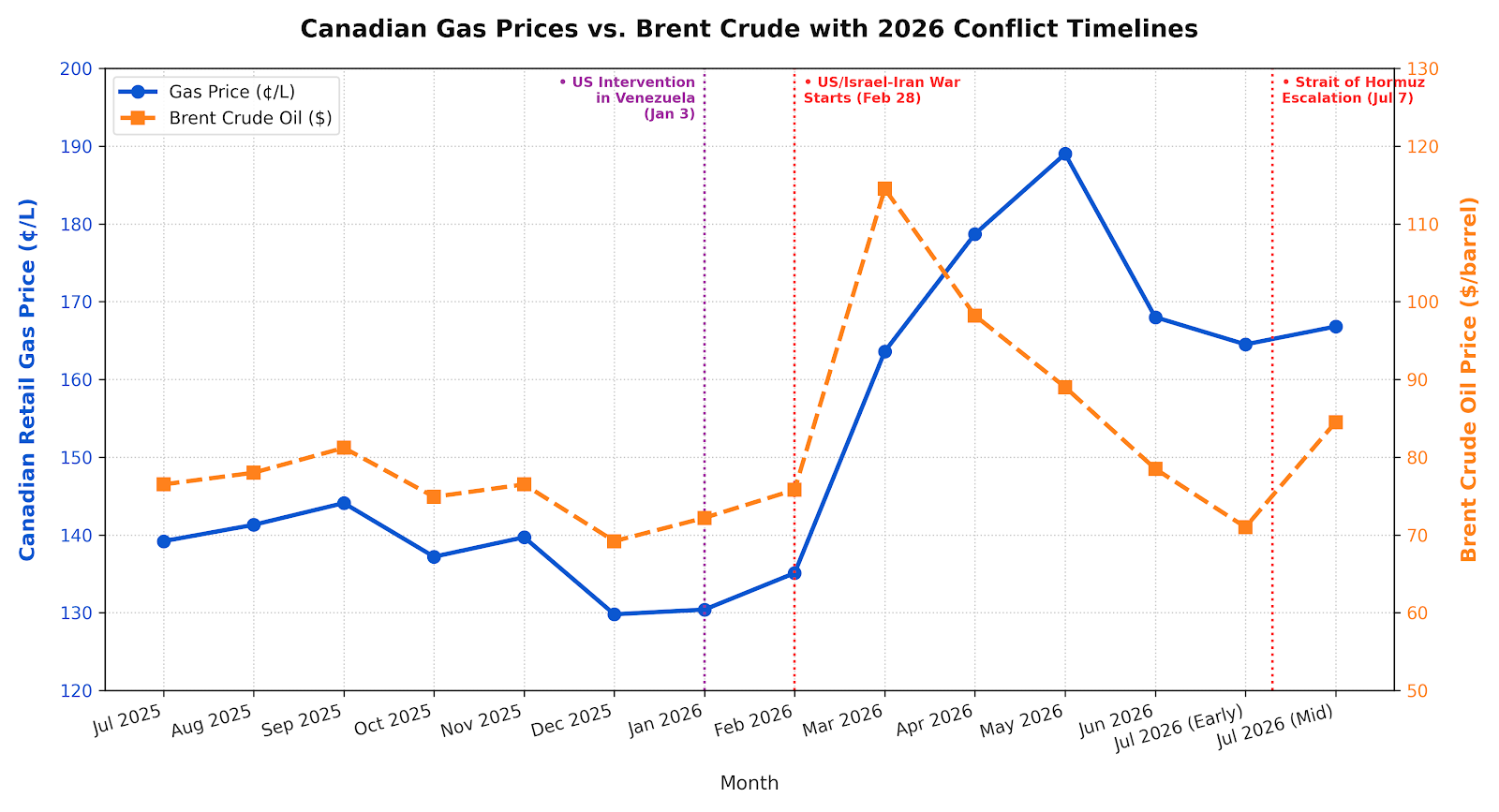
However, these same retailers don’t quite consider their replacement cost as oil prices are falling back down. Instead, this is where game theory takes over where figuring out the best move depends entirely on what the other person decides to do.
Gas stations are slow to cut their prices. While doing so may sell more volume, it would result in less profit on each litre of gas sold. Because gasoline is a commodity, the market functions as an oligopoly with limited competition even though there are many gas stations to buy from. This naturally makes price discovery slow and sticky. The first station to lower its price voluntarily sacrifices its profit margins, so every other station holds their breath and keeps prices high to earn the extra profit for as long as possible.
There is also the supply chain to consider. It takes anywhere from two to three weeks for cheaper crude oil to be purchased, transported via pipeline, refined into gasoline, and delivered to local gas stations. Until that newly refined, cheaper product physically travels through the supply chain and arrives at the local station, pump prices remain tethered to the older, more expensive inventory.
Thankfully, the “rocket and feather” effect is temporary, albeit frustrating to the consumer. Over time, gas prices are highly correlated to the price of oil.
Client portfolios have nevertheless benefitted from this effect by holding Suncor, which owns the Petro-Canada gas stations; South Bow, a pipeline that transports oil to refiners; and Freehold Royalties, which takes no operational risk and pays a 6.6% dividend yield. Because we feel oil prices will remain elevated, we will continue to hold these securities.
-written by Jeff Pollock
DISCLAIMER: The opinions expressed in this publication are for general informational purposes only and are not intended to represent specific advice. All publications have been written by a person other than the person that approved its distribution. No compensation has been received from any party to promote or publish this content. The views reflected in this publication are subject to change at any time without notice. Every effort has been made to ensure that the material in this publication is accurate at the time of its posting. However, Schneider & Pollock Wealth Management Inc. will not be held liable under any circumstances to you or any other person for loss or damages caused by reliance on information contained in this publication. You should not use this publication to make any financial decisions and should seek professional advice from someone who is legally authorized to provide investment advice after making an informed suitability assessment.