
UnitedHealth Group Has Made a Speedy Recovery
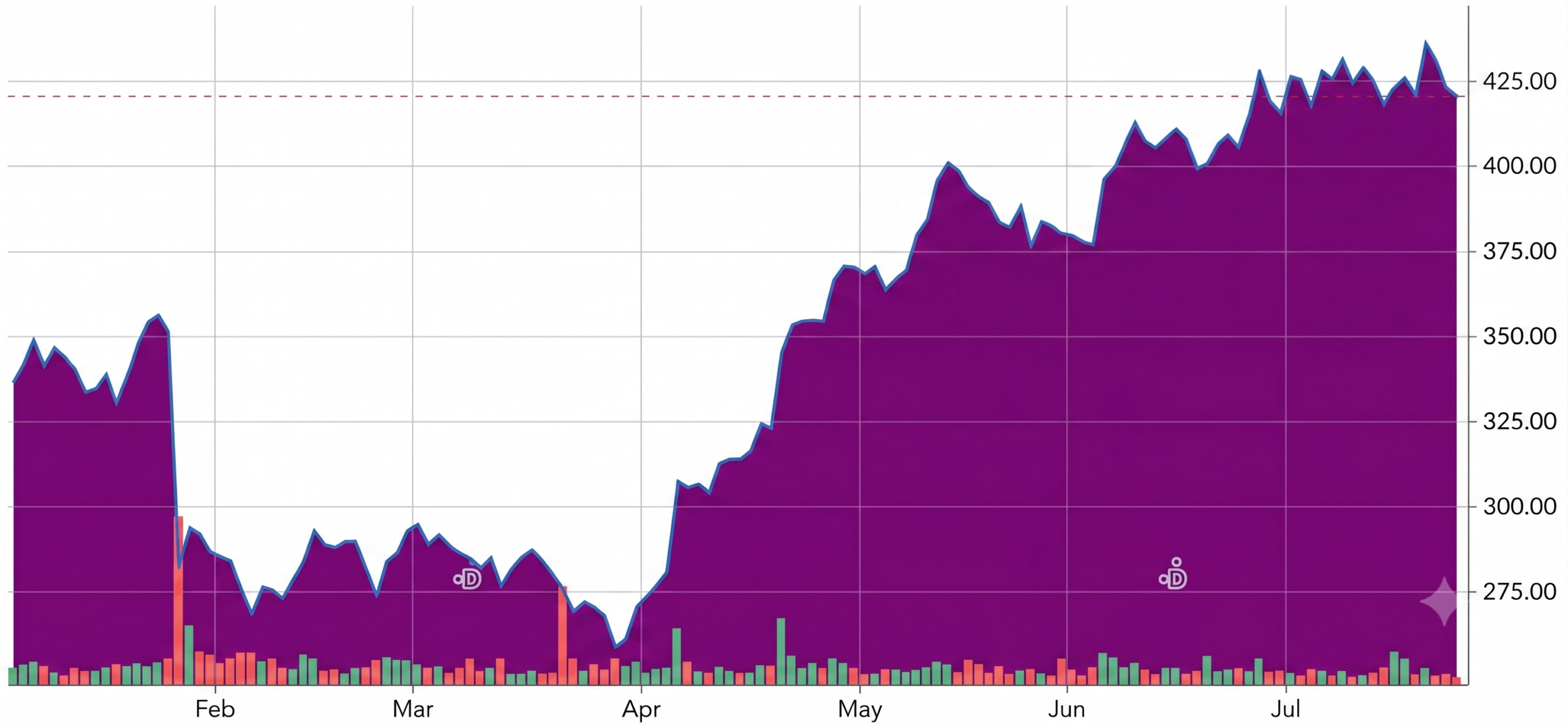
Health insurer UnitedHealth Group (“UNH”) has been one of the best performing stocks so far this year. However, it hasn’t been a straight line up. Following the release of a disastrous quarterly earnings report in April 2025, the market overreacted by crashing the stock price almost 30% in a matter of weeks, marking it a compelling buy for our clients.
The company greatly underestimated the utilization rate for health care procedures, causing the percentage of revenue paid out in claims to jump a staggering 430 basis points to 89.4% that quarter. With substantially higher claims to pay, UNH slashed its earnings guidance for 2025 by almost 40%.
Not long after, CEO Andrew Witty was shown the door and replaced by the previous CEO from 2006 to 2017, Stephen Hemsley. Three days later, Hemsley announced that he had bought $25 million of UNH stock for his personal account. And he wasn’t the only one. The Chief Financial Officer bought about $5 million in stock, and three directors picked up shares as well.
This was the point when we decided to look at buying the stock for client portfolios.
Each time we research a stock, we make a list of pros and cons. If we feel the upside is compelling and the downside is limited, we’ll summarize our thesis into a handful of bullet points. In this case, we had three rather simple reasons on May 18 to take a position.
- The stock price is down 30% in a month;
- The valuation multiple is its lowest since 2013; and
- The new CEO just bought $25 million in stock on May 16.
We bought our clients the stock on May 20, 2025. In order to hedge out currency swings, we bought the Canadian Depositary Receipts at about $15.09 per share (the U.S-listed UNH traded between $314.60-324.49 that day).
A few months later, we were pleased to read the 13F filing showing that Warren Buffett’s Berkshire Hathaway bought $1.57 billion of UNH at some time between April and June 2025.
We didn’t catch the bottom, but we were confident the company would turn itself around.
Over the last year, we increasingly believed that the earnings guidance was far too conservative, especially because the policies would be repriced in 2026 as health insurance contracts reset annually.
Last week, UNH reported quarterly earnings, and it’s safe to say they have recovered with the stock price now over $420 per share (+50% compared to the year before).
Their adjusted earnings are up 57% compared to the year before (exceeding analyst estimates by over 30%) and the medical care ratio – or the ratio of claims paid out relative to revenue – has now dropped from 89.4% last year to 86.7%.
Whenever we initiate a new position for clients, we always follow this very process. First, we need to find a stock that is deeply out of favour (as evidenced by its stock price drop). Then, we ask ourselves if the problem is non-recurring in nature, which can likely be resolved.
UNH has further upside from this price. For that reason, we will continue to hold the stock and add the position for new clients.
-written by Jeff Pollock
(Disclosure: Clients, Jeff Pollock, and Sunni Schneider have a financial interest in UNH as shareholders. No compensation was received to publish this content.)
DISCLAIMER: The opinions expressed in this publication are for general informational purposes only and are not intended to represent specific advice. All publications have been written by a person other than the person that approved its distribution. No compensation has been received from any party to promote or publish this content. The views reflected in this publication are subject to change at any time without notice. Every effort has been made to ensure that the material in this publication is accurate at the time of its posting. However, Schneider & Pollock Wealth Management Inc. will not be held liable under any circumstances to you or any other person for loss or damages caused by reliance on information contained in this publication. You should not use this publication to make any financial decisions and should seek professional advice from someone who is legally authorized to provide investment advice after making an informed suitability assessment.