
Don’t Fall for the September Effect
By: Jeff Pollock
It’s difficult to dispute the seasonal weakness that September historically accompanies.
Many call it the “September Effect”. Going back almost a century, it’s the only month of the year when the S&P 500 statistically posts a loss more often than a gain.
Since 1930, September has delivered a median return of -0.4%.
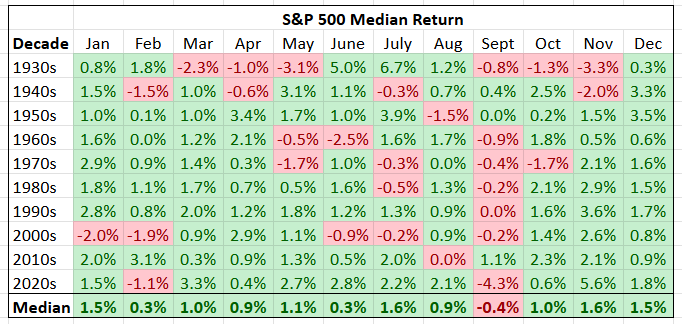
While September has posted a loss 54% of the time over the last 90-plus years, that’s hardly a compelling reason to move to cash in hopes of buying back lower. After all, September still ends in the green 46% of the time.
Why the market gains during some months but loses value throughout others is just about anybody’s guess. Nevertheless, seasonality can become a self-fulfilling prophecy. If investors believe that September is a weak month, they may adjust their strategies accordingly, which can exacerbate a downturn. For that reason, it’s important to be aware of this seasonal trend.
Despite the September Effect, the market gains in value over the long run. When looking back over the last century, the S&P 500 has posted a positive price return during almost 70% of those years.
Rather than wait until year-end, we use September as a tax-loss harvesting opportunity. By selling losing positions in taxable accounts in early September, we offset realized gains and trim our clients’ tax bills. To respect the superficial loss rule, we refrain from repurchasing the same security until 30 days have passed, unless we decide to redeploy capital elsewhere.
Last week, Canada left its benchmark rate unchanged. Next week, the U.S. Federal Reserve will either raise interest rates by 25 basis points or leave them alone. It will depend entirely on whether this Friday’s inflation report meets or exceeds expectations. We expect September’s stock market fate to hinge on the Fed’s next decision rather than seasonal factors.
DISCLAIMER: The opinions expressed in this publication are for general informational purposes only and are not intended to represent specific advice. All publications have been written by a person other than the person that approved its distribution. No compensation has been received from any party to promote or publish this content. The views reflected in this publication are subject to change at any time without notice. Every effort has been made to ensure that the material in this publication is accurate at the time of its posting. However, Schneider & Pollock Wealth Management Inc. will not be held liable under any circumstances to you or any other person for loss or damages caused by reliance on information contained in this publication. You should not use this publication to make any financial decisions and should seek professional advice from someone who is legally authorized to provide investment advice after making an informed suitability assessment.