
High Gas Prices May Drive a Quick Exit from Iran
The average price of gas at the pump for U.S. consumers is up 30% since the year began.
Most of that occurred recently, following the strikes against Iran.
If you follow the prediction markets, it doesn’t look very likely that the Republicans will win the House or even the Senate this fall. Current odds suggest a 52% chance of a Democratic Senate and an 85% chance of a Democratic House. If the Republicans lose control of either chamber, it would become nearly impossible for Trump to pass any spending bills.
If the Republicans hope to turn odds around between now and November, driving up the price of gas is certainly not a conventional strategy.
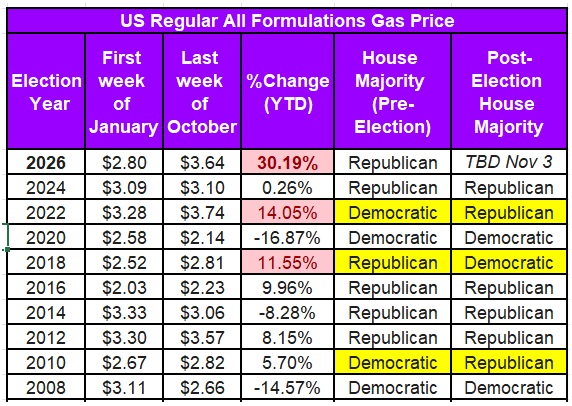
Looking back at election results since 2008, the House has flipped parties three times. Notably, two-thirds of those flips occurred during years when gas prices rose by more than 10% between January and October. The only exception to this trend was in 2016, when Obamacare overshadowed every ballot box issue.
While voters care about many things, high gas prices are a daily, visible reminder of economic pressure.
Because the White House wants to reduce prices at the pump, Trump has a massive incentive to conclude the conflict with Iran as soon as possible. Global energy prices are currently inflated because 20% of the world’s energy flows through the Strait of Hormuz, a waterway that Iran exercises significant de facto control.
History suggests that geopolitical crises are strong buying opportunities. Deutsche Bank research shows that the average market decline from the 30 major geopolitical events since 1939 was 4%, and the selloff was short-lived. Since the February 28 strikes against Iran, the S&P 500 is down exactly 4%.
If the Republicans hope to improve their chances before voters head to the polls in November, ending the conflict in Iran as soon as possible is a good idea. Doing so would not only contract the price of gas at the pumps but also drive stock prices higher.
-written by Jeff Pollock
DISCLAIMER: The opinions expressed in this publication are for general informational purposes only and are not intended to represent specific advice. All publications have been written by a person other than the person that approved its distribution. No compensation has been received from any party to promote or publish this content. The views reflected in this publication are subject to change at any time without notice. Every effort has been made to ensure that the material in this publication is accurate at the time of its posting. However, Schneider & Pollock Wealth Management Inc. will not be held liable under any circumstances to you or any other person for loss or damages caused by reliance on information contained in this publication. You should not use this publication to make any financial decisions and should seek professional advice from someone who is legally authorized to provide investment advice after making an informed suitability assessment.